
How Fitness and Healthcare Teams Work Together for Your Health
Thanks to guest contributor Brad Krause for this article:
Busy adults trying to keep up with work, family, and a body that doesn’t bounce back like it used to often face the same tension: medical visits can address symptoms, while day-to-day habits decide whether progress sticks. That gap is why whole-person health is gaining traction, with fitness and wellness integration becoming a normal part of care rather than an optional add-on. More often, clinical healthcare collaboration brings personal trainers and nurse practitioners into the same conversation, each supporting a holistic health approach that matches real life. With stronger general health awareness, health starts to look less like a solo effort and more like a coordinated team.
Understanding Who Does What on Your Health Team
Integrated care works best when each professional stays in their lane while aiming at the same goal: your everyday health. A personal trainer builds safe, progressive movement habits, a nutritionist turns food into a realistic plan, a wellness coach strengthens follow-through, and a nurse practitioner connects the dots with medical knowledge.
This matters because problems rarely live in one bucket. When roles are clear, you avoid mixed messages and stop treating your health like four separate projects. As a 6.5% increase in NPs with full scope of practice authority who provided visits and billed independently suggests, NPs can take real ownership of clinical decisions, freeing others to focus on daily behavior change.
Picture a busy parent with rising blood pressure and back pain. The NP adjusts care and flags risks, the trainer protects your back while you get stronger, the nutritionist simplifies meals, and the coach keeps you consistent when life gets messy. Clear roles make shared forms and consistent progress updates feel simple, not intrusive.
Keep Shared Care Notes Consistent With One Simple Document Workflow
Once you know who’s doing what on your health team, the next win is making sure everyone stays on the same page, without oversharing.
A simple, privacy-minded way to do that is to standardize the paperwork your team uses and the way they pass it along. Use consistent assessment forms (so a trainer, nutritionist, wellness coach, and medical provider are all looking at the same key fields), then share progress reports and care plans in a predictable format that makes updates easy to spot. Pair that with clear communication norms, who sends what, to whom, and when, so the care plan stays continuous even as different professionals contribute their piece.
Saving these files as PDFs helps keep formatting intact across devices and reduces the risk of accidental edits when documents are shared. And if you’re starting from a Word doc, spreadsheet, or image, an online tool to convert PDF documents can pull everything into that consistent, shareable format. With your documents aligned, it’s much easier to see how collaboration typically unfolds from intake through ongoing support.
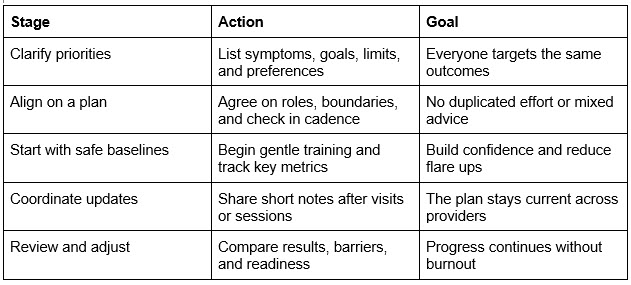
Plan → Align → Act → Review Together
This is the part where collaboration becomes a rhythm, not a one-time project. A shared workflow helps you get the benefits of fitness and clinical support while protecting your time and keeping the plan coherent, especially when patients say appointments feel rushed.
Questions People Ask About Care + Fitness Teams
Q: What does “whole-person support” actually look like?
A: It usually means your plan covers movement, sleep, stress, nutrition basics, meds, and daily routines, not workouts alone. Expect simple targets you can follow plus a way to flag problems early. A good next step is to list your top two health goals and the biggest barrier you face.
Q: What can a nurse practitioner do in a fitness-and-health team?
A: Nurse practitioners can assess symptoms, order or interpret certain tests, manage many treatments, and educate you on self-care. The role is grounded in advanced nursing practice and evidence-based care, which helps keep training choices aligned with your medical needs. Bring your workout notes and any red-flag symptoms to your visit.
Q: How do I avoid getting mixed advice from different professionals?
A: Choose one “home base” plan that everyone can see, even if it is a shared note in your phone. Ask each person to explain how their recommendation supports the same goal. If two ideas conflict, pause the change until they clarify.
Q: Can preventive wellness guidance replace medical care?
A: It supports medical care, but it does not replace it. Wellness coaching can help you build habits and consistency, while clinicians handle diagnosis, risk, and treatment decisions. If you have new or worsening symptoms, check in with your medical team first.
Q: When should I tell my trainer or coach about my diagnosis or medications?
A: Tell them before you start or whenever anything changes that could affect safety, like new meds, dizziness, pain, or blood pressure issues. You do not have to share every detail, just what impacts exercise and recovery. Ask them what information helps them adjust intensity and pacing.
Build a Care Team That Connects Fitness and Medicine
It’s easy to feel pulled between “work out harder” advice and clinical guidance that seems to live in a separate world. The steadier path is an integrated, whole-person approach built on fitness and clinical synergy, where the value of team collaboration supports both prevention and treatment without mixed messages.
With that wellness and medical partnership in place, decisions get simpler, progress feels safer, and confidence in holistic care grows over time. Better health happens when fitness and healthcare work as one team.
Brad Krause was, like me, a participant in the corporate rat race until he decided to break free and work for himself. Since then, he discovered his calling was helping people, and that’s why he created SelfCaring.info.

A service for print-on-demand businesses and entrepreneurs


Whimsy Maxxing Essentials: How Playfulness Boosts Joy And Eases Burnout

How Parents Can Recognize and Manage Anxiety to Support Their Children